Party Mode: rules that change every round
The mode for a room that does not want to agree on a song list — and the best answer to a mixed-skill party.
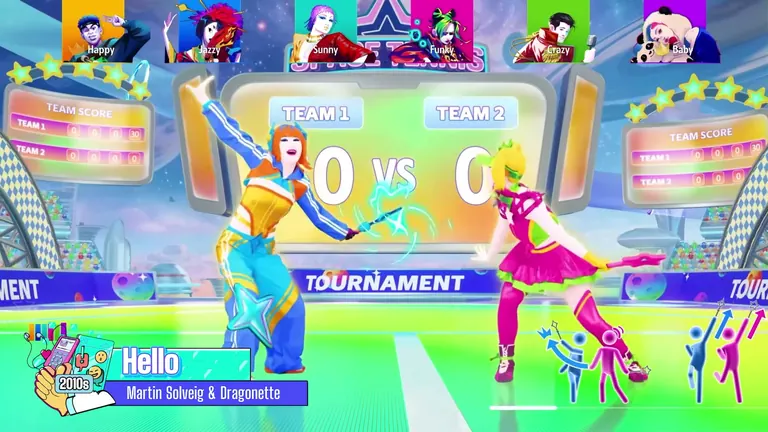
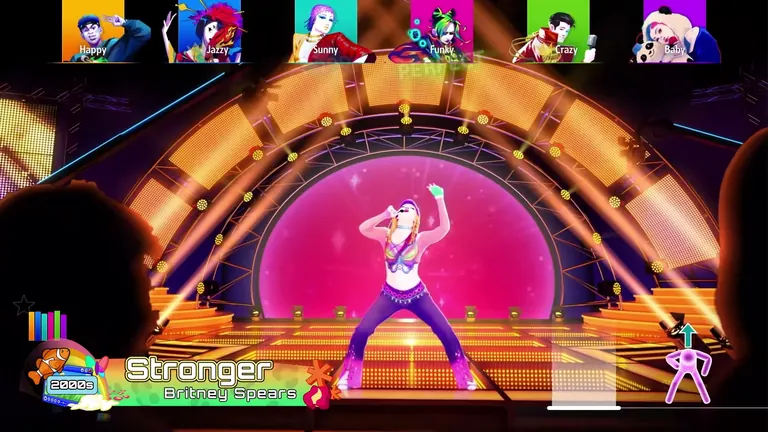
Party Mode shuffles the rules between rounds instead of letting players pick songs normally, so nobody can pre-learn a routine. It is the most group-friendly mode in Just Dance: Decades of Hits because it keeps everyone on unfamiliar ground at the same time. It works locally with up to six dancers.
Every Just Dance night eventually reaches the same argument: somebody wants the song they are good at, and everybody else has to sit through it. Party Mode exists to end that argument.
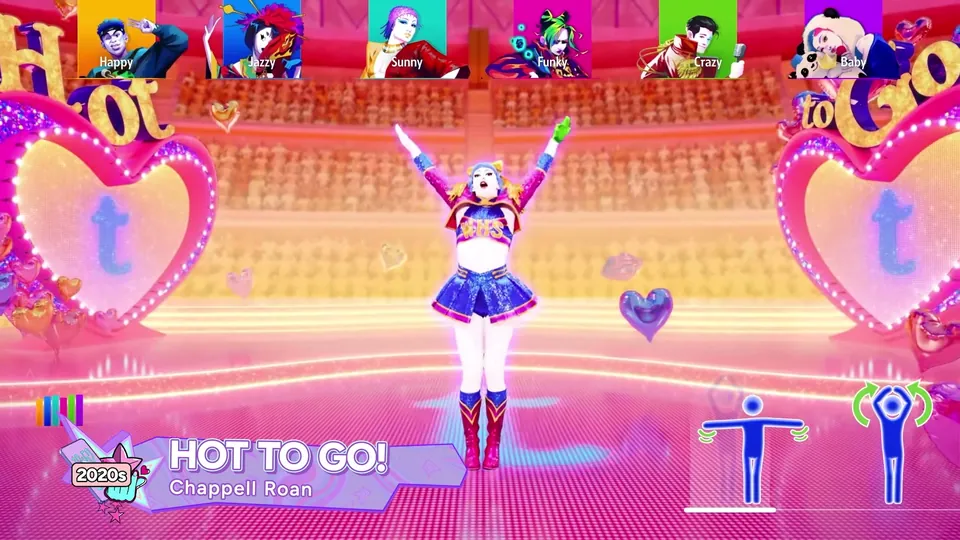
Official Ubisoft in-game screenshot.
What actually changes
Standard play gives you the song list and lets you choose. Party Mode takes that choice away and replaces it with rounds, where the setup changes between them rather than staying fixed. The result is that preparation is worthless: knowing a routine perfectly is less of an advantage than being able to read a new one quickly.
| Standard play | Party Mode | |
|---|---|---|
| Song selection | You choose | Handed to you per round |
| Rules | Fixed per routine | Change between rounds |
| Best for | Practice, score chasing, a specific song | Groups, mixed skill, a whole evening |
| Pre-learned advantage | Large | Small |
Why that matters for a mixed group
In standard play, the strongest dancer in the room wins by default — they pick their best track and everyone else watches them get a five-star score. Under Party Mode's rotating conditions, the same person is as lost as everyone else on the round they did not expect. That flattens the room, and it is why Party Mode is the mode to start a mixed evening with rather than finishing on.
How to run it well
- Play it first, not last. Rounds are short and the rules change fast; it works best as the icebreaker while people are still deciding how seriously to take this.
- Six is the right size. Party Mode scales to the full local maximum, and the six-dancer support in this game is unusual enough that it is worth filling the room once.
- Do not chase scores. Party Mode's purpose is a good hour, not a leaderboard entry. If someone in the room wants to grind a specific routine, switch to standard play.
- Pair it with the multi-dancer blocks. The '90s and 2000s have the highest concentration of routines that need more than one dancer, which keeps everybody in a lane rather than watching.
Party Mode and the phone controller
Every dancer in a Party Mode round still needs their own phone on the same Wi-Fi network, which makes setup the real bottleneck rather than the mode itself. Get all the phones paired before you start the first round — see the phone controller guide for what usually goes wrong.
What Party Mode does not do
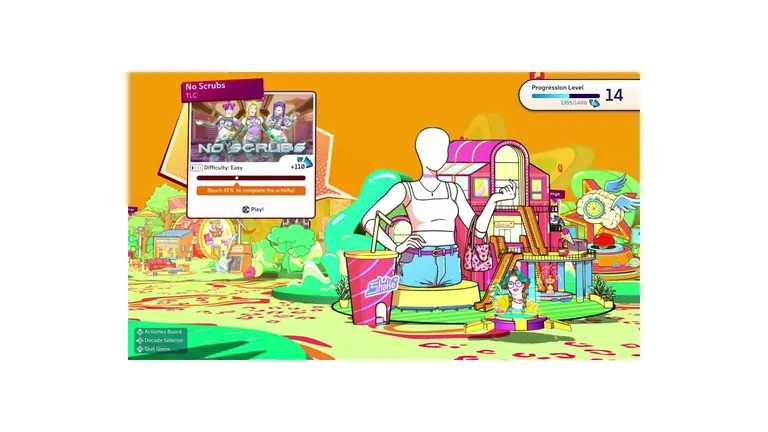
It does not unlock anything the standard modes do not, and it does not have its own progression track. Rewards and unlocks run through the normal play and Adventure Mode systems — see the progression guide for what actually drops and when. Party Mode is a way of playing, not a separate economy.