How scoring works, and how to score higher
Timing against the music, read from a trail you are probably not looking at.
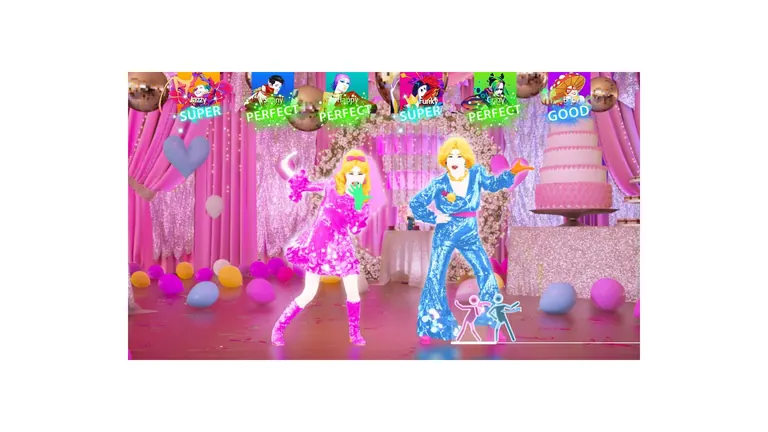
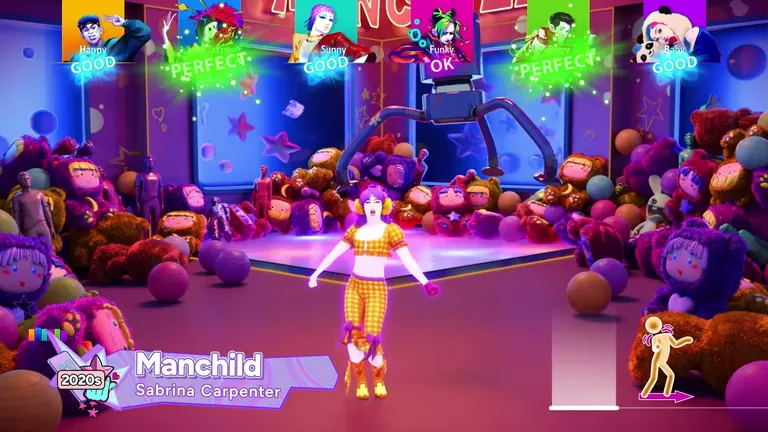
Just Dance: Decades of Hits grades each move against the beat, totals those grades into a five-star rating per routine, and tracks your best result. Scores come from timing accuracy rather than movement size, which is why watching the ghost trail beats exaggerating your moves.
Most new players assume scoring rewards effort — dance bigger, score higher. It does not. It rewards timing, and that single fact changes how you should use the screen.

Official Ubisoft in-game screenshot.
What is being measured
Two things, in this order of importance:
- Timing. Each move is graded against the beat. Being early or late costs you even if the shape is perfect.
- Shape. Within the timing window, the closer your movement is to the prompted one, the better the grade.
Nothing measures how hard you are trying. A small, accurate movement scores better than a big one that lands late, which is why the first step for most players is to stop over-dancing.
The feedback loop on screen
The game gives you three things to read while dancing, and beginners watch the wrong one:
- The coach column shows the routine being performed. Useful for the overall shape of a move, too slow to react to.
- The ghost trail shows the next movement as a fading outline. This is the one that actually raises scores, because it is what lets you arrive at the next move rather than catch up to it.
- The per-move grade appears as you hit or miss. Use it as a diagnostic, not a running commentary — a whole run of poor grades on arm moves usually means the phone is not seeing your arms.
Turning that into habits
Look ahead, not at the coach. Watch the trail. Experienced players are effectively reading the next beat while executing the current one, which is exactly what the trail exists for.
Finish the previous move. Most timing penalties come from leaving a pose early to chase the next one. Hold until the trail moves.
Use your arms and keep the phone in view of them. The app reads hands and arms more reliably than feet, so a routine with large upper-body shapes will always score more consistently than a footwork-heavy one — which is why Danza Kuduro divides players so sharply.
Stop at the chorus and think. If a routine has a repeating section, that is free accuracy: you already know what is coming, so you can focus purely on timing.
Play the same song twice. The second run drops the move names from the screen and expects you to remember, and most people score better on the second attempt purely because they are not reading the instructions any more.
What the stars mean in practice
The five-star rating is your per-routine result and it feeds progression, cosmetics and the completion systems — the progression guide covers what it unlocks. Practically, the useful thing about a five-star scale is that it tells you whether a routine is worth revisiting: three stars means you can play it, five means you know it, and the gap between those two is where the game's harder routines live.
If your scores are stuck regardless of how well you feel you danced, the problem is almost certainly outside the game — display latency or phone placement. The TV setup page has a two-minute test that separates them, and it is worth doing before you conclude that a routine is beyond you.